
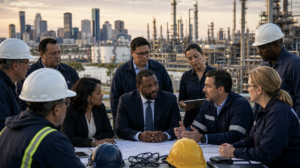
Houston’s chemical manufacturing sector is part of the machinery that keeps the regional economy moving. Chemical facilities support energy production, construction, agriculture, transportation, healthcare, consumer goods and countless other industries. They also operate within a metropolitan area where industrial corridors, residential neighborhoods, highways, waterways and critical infrastructure often exist close together.
That proximity creates both economic opportunity and public responsibility. An emergency at an industrial facility can affect far more than the property where it begins. Smoke, chemical releases, road closures, power failures, contaminated runoff and public concern can spread across jurisdictional boundaries within minutes. Houston cannot afford to build its emergency strategy around agencies and companies meeting for the first time after an alarm has sounded.
As one of the country’s largest and most economically influential cities, Houston has a strong interest in protecting industrial productivity while ensuring that residents, workers and first responders receive accurate information and dependable protection. The next stage of industrial preparedness must be built through a permanent partnership between Houston City Government and Chemical Manufacturing Companies in Houston.
Houston’s Industrial Strength Creates a Shared Responsibility 🏭
Chemical manufacturing creates skilled jobs, supports local contractors and strengthens the supply chains used by businesses across Texas. The industry’s importance, however, means that interruptions can have consequences well beyond a single facility. A serious fire, equipment failure or chemical release can disrupt neighboring companies, transportation routes, utilities and public services.
City officials and plant operators therefore share an interest in preventing small problems from becoming regional emergencies. Government agencies bring emergency coordination, public communication, infrastructure management and regulatory responsibilities to the table. Manufacturers contribute detailed knowledge of their facilities, production materials, safety systems and operational risks.
Neither side can replace the other. A fire department may arrive with exceptional training and equipment, but plant personnel often possess the most immediate knowledge of the materials involved. A company may control an incident inside its gates, but only public agencies can coordinate road closures, emergency alerts, evacuations, shelter-in-place instructions and responses involving multiple jurisdictions.
Partnership does not weaken oversight. It improves the ability of government to enforce standards, understand hazards and respond intelligently. It also gives responsible manufacturers a direct role in strengthening the communities where their employees and customers live.
Preparedness Must Begin Before the Emergency
The worst time to exchange essential information is during the opening minutes of a chemical emergency. Facility maps, chemical inventories, emergency contacts, access points, water supplies and shutdown procedures should already be available to authorized response personnel.
Houston’s Office of Emergency Management serves as the city’s coordinating agency during disasters and works with local, regional, state and federal partners. Chemical manufacturers should be integrated into that coordination before an event occurs, particularly when facilities are located near homes, schools, waterways, highways or other industrial properties.
The city should maintain secure, regularly updated emergency profiles for facilities handling significant quantities of hazardous materials. Those profiles should identify the chemicals stored on-site, the locations of isolation valves, emergency power capabilities, drainage pathways and the employees authorized to make rapid operational decisions.
The Houston Fire Department’s hazardous-material permitting resources already demonstrate the importance of organized documentation and regulatory preparation. A stronger partnership would turn those records into an active planning tool rather than information reviewed primarily during inspections or emergencies.
Annual reviews would help ensure that government agencies are not relying on outdated contact names, facility layouts or material inventories. Chemical operations change. Equipment is replaced, production lines are modified and new materials enter the site. Emergency plans must change with them.
Faster Information Protects Residents and Public Trust 📢
Industrial emergencies often create an immediate information gap. Residents see smoke, smell an odor or encounter emergency vehicles before an official statement is available. Rumors then move faster than verified information, particularly on social media.
A coordinated government-industry communication plan can reduce that gap. Companies should provide city officials with confirmed operational details as quickly as possible, while public agencies translate those details into clear instructions for the community. Messages should identify the affected area, the recommended protective action and the sources residents should follow for updates.
Technical language should never prevent people from understanding what to do. A resident does not need a chemistry lesson during an emergency. The resident needs to know whether to remain indoors, turn off air-conditioning equipment, avoid a road, leave an area or seek medical attention.
Harris County’s Environmental Response Section maintains around-the-clock coverage for incidents involving hazardous materials, industrial releases and chemical spills. It also uses monitoring equipment to evaluate possible effects on the public and environment. City government, county departments and chemical manufacturers should develop compatible communication procedures so that information collected by one organization can support decisions made by another.
Credibility is strengthened when official statements explain what is known, what remains under investigation and when another update will be issued. Public confidence is damaged when organizations offer vague assurances or appear to contradict one another.
Air Monitoring Must Support Real-Time Decisions
Smoke or odor alone cannot reveal the full nature of an industrial release. Reliable air monitoring allows emergency managers to identify chemicals, evaluate concentrations and determine whether protective actions should remain in effect.
The Texas Commission on Environmental Quality air-monitoring network provides important regional information, but stationary monitors cannot answer every street-level question during a fast-moving emergency. Wind direction, weather conditions and the location of a release can produce highly localized effects.
Chemical manufacturers can help close those gaps by maintaining calibrated detection equipment, sharing appropriate readings with government agencies and allowing trained public personnel to verify conditions near facility boundaries. City and county agencies should continue investing in mobile monitoring units that can be deployed rapidly to neighborhoods, schools and transportation corridors.
A shared data standard would make those readings more useful. Responders should know when equipment was calibrated, where each sample was collected, which substance was measured and how the result compares with established health-based guidance.
Public reporting should also continue after the immediate danger has passed. Residents deserve an understandable summary of what was detected, how long the release lasted and why officials determined that an all-clear was appropriate.
Severe Weather Can Turn an Operational Problem Into a Regional Crisis ⛈️
Houston’s industrial planning cannot be separated from hurricanes, flooding, extreme heat and extended power failures. Chemical facilities may have strong internal safety systems, but those systems can be challenged when roads become impassable, utilities fail or employees cannot reach the property.
The city’s broader resilience strategy emphasizes safer neighborhoods, modern infrastructure and stronger regional emergency preparedness. Those goals should include detailed industrial continuity planning, especially for facilities that depend on refrigeration, ventilation, pumping systems or uninterrupted electrical power.
Manufacturers should be prepared to operate critical safety equipment during prolonged outages. Backup systems should be tested under realistic loads rather than assumed to work because they passed a basic inspection. Facilities should also assess whether floodwater could reach storage areas, move unsecured containers or carry contaminated material into drainage systems and waterways.
City government can strengthen that preparation by sharing updated flood, transportation and infrastructure information with industrial operators. Companies can support the city by reporting vulnerabilities before a storm arrives and by coordinating employee access, fuel supplies and emergency deliveries.
This cooperation should continue throughout recovery. A facility that is technically ready to restart may still be affected by damaged roads, limited water pressure or nearby neighborhoods under emergency restrictions. Restart decisions should consider regional conditions rather than the status of a single property.
Neighborhood Protection Must Be Part of Industrial Planning
Some Houston communities have lived near industrial properties for generations. Their residents may experience recurring odors, truck traffic, noise and anxiety about possible emissions. Emergency planning will not earn lasting trust unless those concerns are treated seriously before a crisis.
The City of Houston’s Bureau of Pollution Control and Prevention has operated for decades as part of the city’s effort to address air, water and environmental concerns. Its work can provide a bridge between residents, public-health officials and industrial operators.
Manufacturers should participate in community meetings that explain facility operations, warning systems and emergency procedures in plain language. These meetings should not be promotional presentations. They should provide residents with usable information and a reliable way to raise concerns.
Communication must also reflect Houston’s linguistic diversity. Emergency notices, preparedness materials and public meetings should be accessible in the languages commonly spoken near each industrial corridor. Residents with disabilities, limited internet access or transportation challenges must also be included in evacuation and shelter planning.
The strongest public relationship is built over time. A company that communicates openly during normal operations is more likely to be trusted when an emergency occurs. City government can encourage that openness by establishing consistent expectations for community engagement across the industrial sector.
Joint Training Creates Safer and Faster Responses
Written plans are necessary, but they cannot reproduce the pressure of an actual emergency. Houston should conduct regular joint exercises involving chemical manufacturers, fire crews, law enforcement, emergency managers, pollution-control personnel, healthcare providers and transportation agencies.
Exercises should include realistic complications. A drill might involve a release during severe weather, a disabled communications system, an injured employee, blocked facility access or conflicting information circulating online. These complications reveal weaknesses that remain hidden during a simple tabletop discussion.
Facility employees should understand how public responders will operate after arriving on-site. Responders should understand the company’s command structure and know which employees can provide dependable technical information. Everyone should use compatible terminology and communication channels.
Coordination with Port Houston emergency management is also important because industrial incidents can affect terminals, waterways, freight movement and nearby transportation networks. A disruption along the Houston Ship Channel can quickly become a logistics problem with consequences for the wider region.
After every exercise, participants should produce a corrective-action report with assigned responsibilities and completion dates. A drill has little value when identified problems are acknowledged but never corrected.
Partnership Strengthens Economic Continuity
Industrial safety and economic development should not be treated as competing goals. Preventing incidents protects workers, nearby communities, public infrastructure and the companies themselves.
A major emergency can shut down operations, interrupt suppliers, delay shipments and damage confidence in an entire industrial corridor. Even businesses that were not involved may face road closures, workforce disruptions or public scrutiny. Faster coordination can reduce the duration and geographic reach of those consequences.
Companies with strong government relationships are also better positioned to understand infrastructure projects, permitting expectations and emergency requirements. City officials gain a clearer view of the operational needs of major employers and can make better-informed decisions about roads, drainage, utilities and public-safety resources.
The goal is not to protect companies from accountability. It is to build an environment where responsible operations are recognized, poor practices are corrected and emergencies are handled without avoidable confusion.
Houston Needs a Permanent Industrial Safety Partnership
Houston should establish a formal industrial safety council that meets throughout the year. The council should include city departments, county agencies, chemical manufacturers, emergency responders, public-health representatives, environmental professionals, labor representatives and community leaders.
Its work should focus on practical improvements rather than ceremonial meetings. Priorities should include emergency contact verification, joint training schedules, air-monitoring coordination, public-warning standards, severe-weather planning and after-action reviews.
The council could also identify shared investments that are difficult for one organization to fund alone. These might include mobile monitoring equipment, specialized responder training, multilingual emergency materials and interoperable communications systems.
Performance should be measured publicly. Houston residents should be able to see how many exercises were completed, how quickly emergency information was released, whether corrective actions were closed and how community concerns were addressed.
Conclusion
Houston’s chemical manufacturing industry is too important to be separated from the city’s emergency and resilience planning. The facilities that power regional growth must also be prepared to protect workers, neighbors, infrastructure and the environment when conditions change without warning.
City government brings coordination, public accountability and emergency authority. Chemical manufacturers bring technical knowledge, trained personnel and control over the systems where an incident may begin. When those strengths are combined before a crisis, Houston gains faster decisions, clearer communication and a more effective response.
The next industrial emergency should not be the event that introduces agencies, companies and communities to one another. Houston has the resources and experience to build those relationships now. A permanent partnership will protect lives, preserve public trust and strengthen the industrial economy that remains central to the city’s future.