
City Government Infrastructure Alert: Why General Electric Circuit Breakers Matter for Public Safety

City Government News for Circuit Breaker General Electric

City government buildings depend on electrical systems that most residents never see but rely on every day. Fire stations, police departments, water treatment plants, emergency operations centers, public works facilities, courthouses, libraries, and municipal offices all require dependable power to serve the community. When an electrical component fails inside one of these facilities, the consequences can extend far beyond a dark room or an interrupted workday.

Circuit breakers are a critical part of this hidden infrastructure. They are designed to interrupt electrical current when unsafe conditions arise, helping protect wiring, equipment, buildings, and people. For municipalities operating facilities with older electrical systems, General Electric circuit breakers remain particularly relevant because many existing panels and distribution systems were built around GE equipment.

🏛️ As city leaders evaluate aging infrastructure, emergency preparedness, and capital improvement priorities, electrical-system maintenance deserves a place in the public safety conversation.

Electrical Reliability Supports Essential City Services

Municipal electrical infrastructure powers services that residents expect to remain available during ordinary operations and emergencies. A fire station must be able to maintain communications, charge equipment, operate ventilation systems, and keep emergency vehicles ready. Police facilities depend on secure information systems, dispatch equipment, lighting, access controls, and evidence-storage systems. Public works departments need electricity for pumps, maintenance equipment, traffic systems, and operational communications.

The Federal Emergency Management Agency identifies energy, communications, transportation, water systems, safety and security, and government services as community lifelines. These lifelines represent functions that must remain stable or be restored quickly following an emergency.

Reliable electrical protection supports each of them. A properly selected and maintained circuit breaker can isolate a fault before it damages a larger portion of a building’s electrical system. Without that protection, a localized problem may cause equipment damage, extended downtime, or a more serious safety event.

This connection makes circuit breakers more than routine maintenance items. In government facilities, they are components of operational continuity and community resilience.

The Public Safety Role of Circuit Breakers

Circuit breakers monitor the flow of electricity through a circuit. When current rises above a safe level because of an overload, short circuit, or another fault, the breaker is intended to stop that flow. This interruption helps reduce the danger of overheating, equipment damage, electrical fires, and exposure to hazardous conditions.

The general operating principle is explained in the Wikipedia overview of circuit breakers, which describes how these automatically operated switches protect electrical circuits from damage caused by excess current.

The importance of that protection grows in municipal environments because public buildings often combine many types of electrical loads. A single facility may contain office equipment, heating and cooling systems, security technology, emergency communications, pumps, commercial appliances, specialized machinery, and standby power equipment. Each load places different demands on the electrical distribution system.

A breaker that is damaged, improperly sized, incompatible with the panel, or no longer functioning correctly may weaken the protection intended for that circuit. Municipal maintenance teams therefore need accurate equipment records, regular inspections, and a controlled process for obtaining replacement components.

Why General Electric Breakers Remain Relevant

Many municipal buildings were constructed or renovated when General Electric electrical panels and breakers were widely installed. Even if a city is not selecting GE equipment for a new building, it may still operate numerous facilities containing established GE electrical systems.

When maintenance is required, personnel may need to locate a suitable Circuit Breaker General Electric replacement that corresponds with the existing panel, electrical specifications, and application. The manufacturer name alone is not enough to determine compatibility. The breaker’s model or catalog number, voltage rating, amperage, pole configuration, interrupting rating, physical design, and panel requirements all matter.

A breaker should never be selected simply because it appears to fit. Electrical components that look similar may have important differences in their construction and ratings. Municipal buyers and maintenance departments should verify the exact requirements with qualified electrical professionals and reliable technical documentation before installation.

This careful approach supports public safety while also helping cities avoid unnecessary modifications, purchasing delays, and repeat service calls.

Aging Municipal Buildings Create Additional Challenges

City governments often manage facilities built across several decades. A municipal property inventory may include a newly constructed public safety complex, a mid-century city hall, an older water facility, converted office space, historic buildings, and small utility structures. The electrical equipment inside those properties may be equally varied.

Older facilities can present several challenges. Panel labels may be incomplete, maintenance records may be scattered among departments, and replacement parts may no longer be stocked by ordinary retail suppliers. Renovations completed over the years may also have changed the original electrical loads.

The National League of Cities’ Municipal Infrastructure Conditions Report emphasizes the continued importance of core systems that support daily operations and public safety. Although visible assets such as roads, water systems, and public buildings often receive the most attention, the electrical systems supporting those assets are equally important to reliable service delivery.

Aging equipment does not automatically mean unsafe equipment. It does mean that inspection, documentation, and preventive planning become more important. Municipalities benefit from identifying critical components before a failure occurs rather than beginning the search for an uncommon breaker during an outage.

Resilient Power Begins Inside the Facility

Public discussions about energy resilience often focus on utility lines, substations, generators, solar arrays, battery storage, and microgrids. Those investments are important, but resilient power also depends on the electrical distribution equipment inside each facility.

The U.S. Department of Energy’s grid modernization programs focus on preventing outages, improving resilience, and supporting state and local stakeholders. At the building level, similar principles apply. A resilient facility needs a clear understanding of how power enters the property, how it is distributed, which loads are critical, and how faults are isolated.

A generator cannot provide dependable emergency power if downstream electrical equipment is neglected. A modern communications system cannot operate if an avoidable panel failure disables the circuit serving it. A water pump cannot support community needs if electrical protection equipment is mismatched or unavailable.

The Cybersecurity and Infrastructure Security Agency’s resilient-power guidance also reinforces the importance of planning for power continuity at critical facilities. Municipal governments can apply this broader resilience mindset to their panels, breakers, transfer equipment, generators, and other electrical assets.

Preventive Maintenance Reduces Operational Disruption

A strong municipal electrical-maintenance program begins with accurate information. Each facility should have an updated panel schedule, equipment inventory, inspection history, and record of repairs or modifications. Critical facilities may also benefit from maintaining information about hard-to-source components.

Visual inspections can help identify obvious warning signs such as discoloration, corrosion, moisture intrusion, physical damage, unusual odors, loose components, or evidence of overheating. Breakers that trip repeatedly should not simply be reset without determining the underlying cause. Repeated tripping may indicate an overloaded circuit, damaged equipment, a wiring problem, or another condition requiring professional evaluation.

The Occupational Safety and Health Administration provides electrical-safety information addressing hazards such as electric shock, fires, and explosions. Municipal maintenance policies should require that electrical work be performed only by qualified personnel following applicable safety procedures.

Preventive maintenance also supports budget planning. A city that understands the condition of its electrical assets can prioritize repairs, coordinate upgrades with other building projects, and reduce emergency purchasing. Planned work is generally easier to manage than an unexpected shutdown affecting a public-facing department.

Procurement Accuracy Is Part of Risk Management

Municipal procurement procedures are designed to protect public funds, promote accountability, and ensure fair purchasing. Electrical replacement parts add another requirement: exact technical compatibility.

A purchasing description should include more than a general request for a GE breaker. It should document the catalog number, amperage, voltage, number of poles, interrupting capacity, panel information, condition requirements, and any applicable certifications. Photographs can assist with identification, but they should supplement rather than replace technical verification.

Cities should also consider the source of replacement equipment. Traceability, clear condition descriptions, return policies, and responsive technical support are important when procuring components for government facilities. A low purchase price provides little value if the part is incorrect, damaged, misrepresented, or unsuitable for the application.

For discontinued or difficult-to-find equipment, procurement staff may need to coordinate closely with facility managers, electricians, engineers, and specialized suppliers. That collaboration can prevent delays and help ensure the city receives the correct component.

Electrical Planning Strengthens Emergency Preparedness

Emergency planning should account for failures that originate inside municipal buildings as well as outages affecting the wider utility system. Severe weather, flooding, heat, equipment deterioration, construction accidents, and sudden load changes can all disrupt electrical service.

The Cybersecurity and Infrastructure Security Agency recognizes government facilities, energy, emergency services, communications, water systems, and other assets as parts of the nation’s critical infrastructure. At the local level, these sectors frequently intersect inside city-owned properties.

A municipal emergency operations center, for example, may depend simultaneously on commercial power, backup generation, communications networks, climate control, security systems, and internal distribution equipment. A weakness in any one of these areas can affect the entire operation.

Cities can strengthen preparedness by identifying priority facilities, documenting essential circuits, testing backup systems, maintaining electrical equipment, and establishing a process for obtaining critical replacement components. These actions create a more complete continuity strategy.

Infrastructure Investment Should Include the Components Behind the Walls

Capital improvement plans naturally emphasize highly visible projects. Residents notice a resurfaced road, a renovated park, a new fire station, or an upgraded public building. They rarely see the breakers, panels, wiring, controls, and protective devices that make those facilities usable.

However, effective infrastructure management includes both visible assets and supporting systems. Electrical assessments can be incorporated into facility-condition reviews, renovation planning, energy-efficiency projects, and emergency-preparedness exercises.

The Federal Emergency Management Agency’s hazard-mitigation resources encourage investments that reduce risk and strengthen communities. For municipalities, attention to facility-level electrical resilience can complement larger projects designed to protect residents and sustain essential services.

Replacing a worn or obsolete breaker may appear to be a small maintenance action, but its importance depends on the circuit it protects. When that circuit serves an emergency communication system, water-control equipment, security technology, or another essential function, the public value becomes clear.

Conclusion

General Electric circuit breakers continue to matter because many city facilities still depend on electrical systems built around them. Their role is not limited to switching power on and off. Properly selected and maintained breakers help protect municipal buildings, equipment, employees, first responders, and the residents who rely on public services.

City governments can reduce risk by maintaining accurate electrical records, inspecting aging systems, verifying replacement components carefully, using qualified professionals, and including electrical distribution equipment in resilience planning. These practical measures support safer facilities and more dependable city operations.

Public safety depends on countless systems working together, including many that remain out of sight. Circuit breakers are among those small but essential components that help city government remain operational when the community needs it most.

California Government Warns San Jose HVAC Users: This Simple Mistake Could Send Energy Bills Soaring

Government News for San Jose HVAC

California residents understand how quickly warm weather can turn a comfortable home into an uncomfortably hot space. In San Jose, long stretches of sunshine and rising summer temperatures place heavy demands on residential air-conditioning systems. When cooling equipment operates for hours each day, even a small maintenance issue can significantly affect energy use, indoor comfort, and monthly utility costs.

One of the easiest HVAC problems to overlook is also one of the simplest to prevent: a dirty or clogged air filter. It may seem like a minor household maintenance task, but an air filter directly affects how efficiently conditioned air moves through a heating and cooling system. When airflow becomes restricted, the equipment must work longer and harder to reach the temperature selected on the thermostat.

Information published by the California Energy Commission emphasizes the importance of efficient HVAC equipment and properly functioning air-distribution systems. For San Jose property owners, routinely inspecting and replacing the air filter can help control energy consumption, protect expensive equipment, and maintain a healthier indoor environment.

The Simple HVAC Mistake That Raises Energy Costs

Forgetting to replace an HVAC filter allows dust, hair, pollen, lint, pet dander, and other airborne particles to accumulate on the filter’s surface. As that layer becomes thicker, less air can pass through the return vent and into the HVAC system.

The blower motor must continue operating as it attempts to pull air through the clogged material. At the same time, the cooling system may need longer cycles to move enough conditioned air into the rooms. A system that once cooled a home efficiently may begin running almost continuously during hot afternoons.

The U.S. Department of Energy identifies replacing or cleaning air-conditioner filters as one of the most important routine maintenance tasks for efficient operation. Neglecting the filter can reduce airflow and allow dirt to reach components that need to remain clean.

Higher electricity consumption is only one possible result. Restricted airflow can also contribute to uneven temperatures, reduced comfort, excessive equipment wear, frozen evaporator coils, and premature component failure. What begins as an inexpensive filter replacement can eventually become a costly service appointment if it is ignored.

Why San Jose Homes Are Especially Vulnerable

San Jose’s warm, dry summers place sustained pressure on home cooling systems. During periods of extreme heat, air conditioners may run throughout the afternoon and well into the evening. Every additional hour of operation moves more air through the filter and increases the amount of debris it can collect.

Outdoor conditions also affect indoor filtration needs. Dust from landscaping, seasonal pollen, wildfire smoke, nearby construction, and vehicle pollution can enter homes through doors, windows, cracks, and ventilation systems. Properties with pets or several occupants may experience even faster filter buildup.

Homeowners who need dependable San Jose HVAC performance should treat filter inspection as a regular part of property maintenance rather than an occasional chore. A system that receives adequate airflow can cool rooms more consistently, operate more efficiently, and respond more effectively when temperatures climb. 🌡️

California’s changing climate adds another reason to keep cooling equipment in good working condition. The state’s California Climate Adaptation Strategy explains how California is preparing for climate-related risks, including extreme heat. Reliable home cooling becomes increasingly important when high-temperature events last for several consecutive days.

How a Clogged Filter Makes the System Work Harder

A central HVAC system depends on continuous air circulation. Warm indoor air enters through the return ducts, passes through the filter, moves across the evaporator coil, and returns to the living space as cooled air. A clogged filter disrupts this entire process.

Reduced airflow means less warm air reaches the cooling coil. The system may remain on longer because the thermostat does not detect the expected temperature change. Longer cycles consume additional electricity and place more stress on the blower motor, compressor, and other mechanical parts.

Severely restricted airflow may cause the evaporator coil to become too cold. Moisture on the coil can freeze, producing a layer of ice that further blocks normal operation. The house may then feel warmer even while the air conditioner continues running. Operating the system in this condition wastes energy and increases the possibility of damage.

The California Public Utilities Commission provides information about energy-efficiency programs intended to help Californians reduce consumption and lower monthly bills. Equipment upgrades can produce meaningful savings, but basic maintenance remains essential. Even high-efficiency equipment cannot perform as intended when its airflow is obstructed.

Recognizing the Signs of a Dirty HVAC Filter

A filter does not need to be completely covered in debris before it begins affecting performance. Gradual changes can appear throughout the home as airflow becomes more restricted.

Common warning signs include weak air coming from supply vents, longer cooling cycles, increased dust on furniture, rooms that remain warmer than others, unusual equipment noises, and an unexplained increase in electricity use. The system may turn on frequently without producing the expected level of comfort.

A visual inspection provides the clearest evidence. A clean disposable filter generally allows light to pass through much of its surface. A filter that appears gray, brown, dusty, or covered with hair should usually be replaced.

Some filters are designed to be washed and reused, while others must be discarded. The equipment manufacturer’s instructions should determine the correct method. Installing the wrong size or forcing a filter into place may allow unfiltered air to travel around its edges.

The basic concept of heating, ventilation, and air conditioning involves controlling temperature, humidity, ventilation, and indoor air quality. The filter supports this process by capturing particles before they circulate through the equipment and return to occupied rooms.

Choosing the Correct Replacement Schedule

Many standard filters are marketed for replacement every 30, 60, or 90 days, but no single schedule is appropriate for every property. Actual replacement frequency depends on filter type, system use, household conditions, and outdoor air quality.

A home with no pets and limited HVAC use may be able to wait longer between replacements. A household with multiple pets, allergy concerns, frequent air-conditioning use, or nearby construction may need to inspect its filter monthly and replace it more often.

During a San Jose heat wave, checking the filter before the hottest weather arrives can prevent avoidable problems. It is also sensible to inspect it after extended periods of smoke or poor outdoor air quality.

The California Air Resources Board offers information about air pollution, wildfire smoke, and steps Californians can take to protect indoor air quality. When smoke is present, residents may depend more heavily on filtration and keep doors and windows closed. Those conditions can cause a filter to collect particles faster than usual.

A replacement schedule should be based on inspection rather than the calendar alone. Writing the installation date on the filter frame or setting a recurring phone reminder can make the task easier to remember. 📅

Filter Efficiency Must Match the HVAC System

A filter’s Minimum Efficiency Reporting Value, commonly called its MERV rating, indicates its ability to capture particles of different sizes. Higher ratings generally collect smaller particles, but the most restrictive filter is not automatically the best choice for every system.

Some older residential systems cannot comfortably move air through a highly restrictive filter. Installing one without confirming compatibility may reduce airflow even when the filter is clean. The correct filter should balance particle capture with the airflow requirements of the equipment.

The California Department of Public Health provides ventilation and filtration guidance that discusses improved filtration while recognizing the importance of system capabilities. Homeowners should consult the HVAC manufacturer’s specifications or a qualified technician before changing to a substantially higher MERV rating.

The filter must also fit the designated slot correctly. Gaps around the frame allow air and debris to bypass the filtration material. The dimensions printed on the existing filter provide a starting point, although the actual measurements may vary slightly from the labeled size.

Additional Steps That Help Control Cooling Costs

Filter replacement delivers the best results when it is combined with other sensible energy-saving habits. Thermostat settings should remain consistent, especially during the hottest part of the day. Constantly lowering the setting does not cool a home instantly and may cause the system to run for unnecessarily long periods.

Closing blinds or curtains on sun-facing windows reduces solar heat gain. Sealing gaps around windows and exterior doors helps keep cooled air indoors. Ceiling fans can improve comfort, although they should be turned off when a room is unoccupied because fans cool people rather than the air itself.

Supply and return vents should remain open and unobstructed. Furniture, rugs, curtains, and storage boxes can interfere with circulation. Outdoor condenser units also need adequate clearance from leaves, weeds, and other debris.

The ENERGY STAR program provides guidance about heating and cooling efficiency, system maintenance, thermostat use, and equipment replacement. These measures work together to reduce unnecessary energy consumption while supporting consistent indoor comfort.

Professional maintenance remains valuable even when homeowners replace filters regularly. A trained technician can inspect electrical connections, refrigerant performance, condensate drainage, coils, motors, ducts, and safety controls. Annual service can identify developing problems before peak cooling season places the equipment under maximum strain. 🔧

Why Preventive Maintenance Matters Beyond One Utility Bill

A clean filter costs relatively little compared with an HVAC repair or early system replacement. Maintaining proper airflow can reduce strain on internal components and help the equipment provide dependable service over a longer period.

Preventive care also supports healthier indoor conditions. A correctly installed filter captures particles before they circulate repeatedly through the home. Filtration alone cannot eliminate every indoor contaminant, but it plays an important role alongside ventilation, moisture control, cleaning, and source reduction.

Energy efficiency also carries a broader public benefit. When thousands of homes reduce avoidable electricity use during hot afternoons, demand on California’s power grid decreases. That reduction becomes especially valuable during periods when cooling systems across the region are operating simultaneously.

California’s energy policies frequently connect household efficiency with affordability, reliability, and environmental responsibility. Replacing a dirty air filter will not solve every energy challenge, but it is an immediate and practical action available to most property owners.

Conclusion

The overlooked HVAC filter can have a surprisingly large effect on comfort, equipment performance, and energy consumption. When dirt and debris restrict airflow, an air conditioner must operate longer to cool the home. That additional work can raise electricity costs, accelerate wear, and increase the risk of mechanical problems during the hottest days of the year.

San Jose residents can avoid this common mistake by inspecting filters regularly, following equipment recommendations, choosing a compatible replacement, and scheduling professional maintenance when necessary. Combining those steps with reasonable thermostat settings, clear vents, window coverings, and basic air sealing can further reduce cooling demand.

A clean filter may be a small part of an HVAC system, but replacing it at the proper time is one of the simplest ways to protect household comfort and prevent an avoidable increase in summer energy bills.

How One Arborist Can Save a City Government Thousands in Storm Damage

City Government News for Arborist Near Me

A severe storm can change a quiet city street in minutes. Heavy branches crash onto parked vehicles, mature trees block emergency routes, power lines become tangled in broken limbs, and public works crews suddenly face days of cleanup. While storms cannot be prevented, much of the tree-related damage they cause can be reduced through preparation.

That preparation often begins with one professional who may not receive much attention during municipal budget discussions: the arborist.

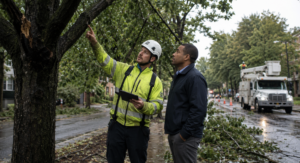
A qualified arborist can identify structural weaknesses, organize preventive maintenance, document hazardous trees, help protect public infrastructure, and guide city departments through storm response. For city governments working with limited personnel and tight budgets, this knowledge can mean the difference between an orderly response and an expensive emergency.

Trees are valuable public assets, but they must be managed with the same care given to roads, drainage systems, public buildings, and utilities. A city that treats tree maintenance as an occasional landscaping expense may eventually pay much more through emergency removals, property damage, blocked streets, overtime, lawsuits, and interrupted public services.

Municipal Trees Are Part of City Infrastructure 🌳

Trees along streets, in parks, around municipal buildings, and beside sidewalks are often viewed primarily as attractive features. In reality, they are part of a city’s working infrastructure.

The practice of urban forestry includes the planning, care, protection, and management of trees throughout cities and populated communities. Municipal arborists and urban foresters must consider public safety, tree health, transportation access, utilities, drainage, development, environmental conditions, and long-term maintenance.

A healthy tree can shade pavement, reduce heat around buildings, slow stormwater runoff, improve air quality, and add character to a neighborhood. A neglected tree with a damaged trunk, weak branch attachment, compromised root system, or advanced decay can become a costly hazard during high winds.

The challenge for city government is that these problems are not always visible to an untrained observer. A tree may appear green and healthy while decay is developing inside the trunk. Roots may have been damaged during road construction years earlier. Large limbs may be carrying too much weight over a roadway, playground, parking area, or public building.

An arborist evaluates trees as living structures. That perspective allows city leaders to address developing problems before wind, rain, ice, or saturated soil turns them into emergencies.

Preventive Inspections Reduce Expensive Surprises

Storm preparation should begin long before severe weather appears in the forecast. A municipal tree inspection program allows an arborist to locate trees that present the greatest risk and recommend work according to priority.

High-priority locations often include emergency routes, school zones, parks, heavily traveled streets, sidewalks, government buildings, utility corridors, and areas where large trees stand close to homes or businesses. The arborist can evaluate the condition of trunks, branches, roots, crowns, and surrounding soil while considering what could be damaged if part of the tree failed.

The goal is not to remove every large or mature tree. Responsible arboriculture focuses on managing risk while preserving healthy trees whenever practical. Corrective pruning, cable or support systems, soil improvements, pest management, crown reduction, and removal of deadwood may extend the safe life of a valuable tree.

The International Society of Arboriculture explains through its public education resource, TreesAreGood.org, that professional arborists have specialized knowledge for proper tree care and can safely address storm-damaged trees while reducing additional danger to property and people.

When a city needs local assistance with tree inspections, risk management, or municipal planning, searching for an experienced Arborist Near Me can help officials locate professional support before the next storm creates an urgent need.

Small Maintenance Costs Can Prevent Large Repair Bills

Preventive tree work requires funding, but emergency tree failure can create expenses across several city departments at the same time.

A large limb falling across a roadway may require police traffic control, public works equipment, emergency tree crews, barricades, debris hauling, and overtime. If the limb damages a traffic signal, streetlight, sidewalk, drainage structure, public vehicle, or utility line, repair costs can rise quickly. When a tree blocks access for an ambulance, fire engine, or utility crew, the consequences extend beyond the price of cleanup.

A single well-timed pruning operation or planned removal may prevent many of those expenses.

Research published by the U.S. Forest Service has examined the costs and benefits of municipal forests in several American cities. The research found that participating cities received measurable benefits from their tree-management investments, including environmental and economic value.

Those benefits are strongest when trees are managed throughout their life cycle. A city gains less from its urban canopy when young trees are planted without adequate watering, mature trees are ignored for decades, or hazardous trees are addressed only after residents report falling branches.

An arborist helps city leaders direct limited funds toward the work that carries the greatest public-safety value. Instead of responding randomly to complaints, the city can build a defensible maintenance schedule based on condition, location, consequences, and urgency.

An Arborist Improves Storm Response Planning ⚠️

Tree management should be included in a city’s broader emergency operations plan. During a severe storm, city departments need a clear process for receiving damage reports, prioritizing blocked routes, coordinating contractors, protecting utility crews, documenting debris, and communicating with residents.

The International City/County Management Association emphasizes the importance of practical emergency planning for local governments, including smaller communities that may not have a large emergency management department.

An arborist can contribute directly to that planning. Before storm season, the arborist can help identify vulnerable areas, prepare contractor contact lists, estimate equipment needs, and establish procedures for inspecting damaged trees. The arborist may also help train public works employees to recognize conditions that require immediate professional attention.

During recovery, priorities must be set carefully. A tree blocking access to a hospital, fire station, or major transportation route must be addressed before a damaged tree in a low-traffic area. Trees resting on electrical lines require coordination with the utility provider. Hanging branches over sidewalks or streets may require temporary closures until safe removal can be completed.

Without professional guidance, crews may remove trees unnecessarily, leave dangerous branches overhead, or make improper cuts that create future weaknesses. An arborist helps the city move quickly without allowing urgency to replace sound judgment.

Better Records Can Protect Municipal Budgets

Good documentation is one of the least visible but most valuable parts of municipal tree management.

A tree inventory can record species, approximate size, condition, maintenance history, geographic location, inspection date, and recommended work. Photographs and written risk assessments provide additional evidence that the city is monitoring its public trees and responding according to established priorities.

These records allow city leaders to prepare realistic maintenance budgets instead of waiting for emergency requests. They also help public works departments plan pruning cycles, track removals, schedule replacements, and identify neighborhoods where aging trees may fail at similar times.

Documentation becomes especially important after a declared disaster. FEMA debris-management guidance addresses vegetative debris such as branches, trunks, stumps, and whole trees. Municipalities seeking reimbursement may need organized records showing what work was performed, where it occurred, why it was necessary, and how debris was measured and removed.

An arborist can support that process by distinguishing between routine maintenance and emergency work, recording hazardous conditions, helping estimate debris, and documenting why particular removals were required for public safety.

Accurate information can also help a city defend its decisions. When residents object to a removal or question why one neighborhood received attention before another, officials can point to documented inspection criteria rather than relying on informal judgment.

Trees and Stormwater Must Be Managed Together

Tree management and stormwater management are closely connected. Trees intercept rain, slow the movement of water, improve soil conditions, and reduce the amount of runoff reaching streets and drainage systems.

The U.S. Environmental Protection Agency recognizes municipal street trees as an important part of public green infrastructure. Leaves, stems, and roots can slow rainfall, capture water, and reduce stormwater runoff while also providing shade, air-quality benefits, and other community advantages.

However, damaged or poorly selected trees can create drainage problems. Roots may interfere with infrastructure when trees are planted in spaces that are too small. Fallen leaves and branches may obstruct inlets. Saturated soil may weaken root stability, particularly when trees already have root damage or decay.

An arborist helps planners select appropriate species, planting locations, soil volumes, and maintenance methods. This creates a healthier canopy that can contribute to stormwater control without creating avoidable conflicts with sidewalks, streets, sewer lines, buildings, or overhead utilities.

That cooperation should begin during project design. Arborists can work with engineers, planners, developers, public works directors, and landscape architects before construction begins. Protecting roots during excavation is far less expensive than removing a mature tree several years after construction damage causes it to decline.

Public Works Crews Benefit From Arborist Coordination

Public works departments are often among the first municipal teams responding after severe weather. Crews clear streets, manage debris, repair infrastructure, place barricades, and restore access for emergency vehicles.

The American Public Works Association describes public works as an essential emergency response partner responsible for roadway clearance, traffic control, debris management, damage assessment, infrastructure repair, and restoration of public services.

An arborist makes those operations safer and more efficient. Tree failures can involve enormous weight, hidden tension, unstable trunks, suspended branches, and damaged root plates. A tree leaning against another tree or building may shift without warning. Cutting the wrong limb can release stored force and place workers in immediate danger.

The arborist can evaluate the safest order of work, determine whether specialized climbing or crane equipment is needed, and identify trees that should remain untouched until electrical or structural hazards are addressed.

This coordination prevents equipment from being sent to locations where it cannot be used effectively. It also reduces the chance that general crews will attempt work requiring advanced tree-care skills.

A Citywide Canopy Plan Builds Long-Term Resilience

Storm protection is not limited to pruning existing trees. Cities also need a long-term plan for replacing aging or damaged trees with species suited to local conditions.

Planting the same species throughout an entire neighborhood can create widespread vulnerability to insects, disease, drought, ice, or wind. Diversity helps prevent one threat from eliminating a large portion of the city’s canopy at once.

The National League of Cities has highlighted urban tree canopies as a tool for strengthening community resilience. Local leaders can use planning, policy, maintenance, and thoughtful development standards to protect and expand these public resources.

An arborist can help the city evaluate species diversity, age distribution, planting conditions, canopy gaps, maintenance needs, and storm vulnerability. This information supports smarter decisions about where new trees should be planted and which species are most likely to survive.

Young trees also require care. Planting ceremonies may attract attention, but watering, structural pruning, mulching, and early inspections determine whether those trees become durable public assets. An arborist ensures the city’s investment does not end when the tree enters the ground.

Conclusion

One arborist cannot stop a hurricane, thunderstorm, tornado, ice storm, or destructive wind event. That professional can, however, help a city government enter the storm with fewer known hazards, clearer priorities, stronger records, safer procedures, and a healthier urban forest.

The savings may come from a branch that never reaches a public vehicle, a tree that never blocks an ambulance route, a damaged trunk identified before it falls, or documentation that supports disaster reimbursement. These avoided costs rarely receive headlines because the emergency never happened.

That is the value of preventive arboriculture.

For city governments, hiring an arborist is not simply an investment in attractive streets and parks. It is a practical decision involving public safety, infrastructure protection, stormwater management, emergency preparedness, and responsible budgeting.

A city that cares for its trees before the wind begins is better prepared to protect its residents, its employees, and its financial resources when the next major storm arrives.

San Jose HVAC and City Government: The Hidden Issue Affecting Public Buildings

City Government News for San Jose HVAC

Public buildings rarely attract attention when everything inside them works. Residents enter a library, community center, government office, recreation facility, or public meeting room expecting reasonable temperatures, clean air, dependable lighting, and a safe environment. The mechanical systems operating above ceilings and behind locked doors remain almost invisible until something goes wrong.

That invisibility can make heating, ventilation, and air conditioning one of the most overlooked parts of city facility management. In San José, HVAC performance affects much more than whether a room feels warm or cool. It can influence indoor air quality, energy expenses, employee working conditions, public access, emergency preparedness, equipment reliability, and the city’s broader environmental goals.

As California communities contend with hotter weather, wildfire smoke, rising operating costs, aging infrastructure, and stricter energy standards, public-building HVAC systems deserve a more prominent place in local government planning. This is not simply a maintenance matter. It is a public-service issue with financial, environmental, and health implications.

Public Buildings Depend on Systems Residents Rarely See

A public facility can appear solid and dependable from the outside while relying on mechanical equipment that has operated for decades. Air handlers, rooftop units, boilers, chillers, heat pumps, ducts, dampers, thermostats, control panels, filters, and ventilation equipment all work together to maintain usable indoor conditions.

The basic purpose of heating, ventilation, and air conditioning is to regulate temperature, humidity, airflow, and indoor air quality. In a government building, however, HVAC must often serve areas with very different occupancy patterns. A council chamber may fill quickly for a public meeting, while offices down the hall remain lightly occupied. A library may experience steady traffic throughout the day, while an activity room becomes crowded only during scheduled programs.

Older systems may not adapt efficiently to those changes. They may cool vacant rooms, struggle when a large group arrives, or rely on manual adjustments that place additional demands on facility employees. Even when the equipment continues running, declining performance can quietly increase energy consumption and repair costs.

A system does not have to fail completely to become a problem. Uneven temperatures, excessive noise, weak airflow, persistent odors, frequent cycling, moisture, and repeated service calls can all indicate that a building is operating below its potential.

Indoor Air Quality Is a Public-Service Responsibility

Temperature complaints are easy to notice. Air-quality concerns are often less visible. Pollutants, fine particles, excess humidity, stale air, and inadequate ventilation may not produce an immediate mechanical failure, yet they can affect how people experience a public facility.

The U.S. Environmental Protection Agency’s guidance for office buildings emphasizes the importance of HVAC design, operation, airflow, filtration, and pollutant management. These considerations are especially relevant in buildings that serve large and varied groups of residents.

Libraries, permit offices, senior programs, community centers, and administrative buildings may welcome children, older adults, employees, visitors, and people with different health needs during the same day. A well-maintained ventilation system helps introduce outdoor air, circulate conditioned air, filter particles, and prevent sections of a building from becoming uncomfortable or stagnant.

Routine attention to filters, condensate drains, coils, dampers, ducts, sensors, and outdoor-air intakes can prevent small problems from growing. Moisture management is particularly important because leaks, clogged drains, or poorly controlled humidity can damage finishes and create additional indoor-environment concerns.

Good indoor air quality does not come from one piece of equipment. It depends on the building envelope, cleaning practices, occupancy, maintenance, filtration, ventilation, and correct system operation working together.

Extreme Heat Changes the Role of Civic Facilities

Air conditioning in a public building was once viewed primarily as a comfort feature. During periods of extreme heat, it becomes part of a community’s protective infrastructure.

The City of San José’s hot-weather safety guidance identifies air conditioning as one of the most effective ways to remain safe during extreme temperatures. Residents without adequate cooling at home may depend on air-conditioned public locations and designated cooling centers.

That reliance changes the consequences of an HVAC failure. A malfunction in a lightly occupied storage facility may be inconvenient. A malfunction in a community building expected to offer relief during a heat event can interrupt an essential public service.

City Government planning should therefore consider more than ordinary maintenance schedules. Critical facilities may require priority inspections before the hottest months, clear emergency response procedures, access to replacement parts, backup cooling plans, and reliable communication between facility managers and department leaders.

Preventive work completed during mild weather is usually less disruptive than emergency work performed when temperatures are already dangerous. Preparing early can also help the city identify buildings that are no longer capable of meeting modern cooling demands.

Wildfire Smoke Creates Another Layer of Risk

San José and the wider Bay Area must also prepare for periods when wildfire smoke affects outdoor air. During these events, public buildings can become important places of refuge, but only when their ventilation and filtration systems are properly configured.

The Bay Area Air District’s wildfire safety guidance recommends effective particle filtration and discusses the value of higher-rated HVAC filters during smoke events. Public facilities may require additional operational planning because changing a filter is not always as simple as installing the highest rating available.

A filter must be compatible with the system. Equipment that was not designed for increased airflow resistance may perform poorly when fitted with a more restrictive filter. Facility teams need to evaluate fan capacity, filter dimensions, pressure differences, outdoor-air settings, building leakage, and the condition of the existing equipment.

During smoky conditions, a building may also need to adjust how much outdoor air is introduced while still maintaining acceptable ventilation. These decisions require informed management rather than a one-size-fits-all response.

The most dependable approach is to assess buildings before smoke arrives. Testing controls, reviewing filter inventories, inspecting seals, and documenting system settings can help public facilities respond more effectively when regional air quality deteriorates. 🌫️

Energy Waste Quietly Affects Municipal Budgets

HVAC equipment is often among the largest energy users in a public building. When a system operates inefficiently, the extra expense may be spread across monthly utility bills and remain less noticeable than a major repair invoice.

Dirty coils, failing sensors, leaking ducts, incorrect schedules, simultaneous heating and cooling, poorly calibrated controls, clogged filters, and malfunctioning economizers can all waste energy. A building may continue serving the public while consuming far more electricity than necessary.

The U.S. Department of Energy’s commercial HVAC maintenance guidance reports that operations and maintenance best practices can produce meaningful annual energy savings. For a city managing multiple facilities, modest improvements across many buildings can add up to substantial long-term value.

Preventive maintenance also gives decision-makers better information. Service records can reveal which systems need frequent repairs, which facilities experience recurring comfort complaints, and which equipment is approaching the end of its practical life.

This data helps City Government leaders distinguish between a unit that needs routine service and a building that requires a planned capital improvement. Without dependable records, public agencies can become trapped in a cycle of emergency repairs that preserve outdated equipment without addressing the underlying problem.

Electrification Is Changing Long-Term HVAC Planning

San José has already identified building electrification as part of its environmental strategy. The city’s Climate Smart San José building electrification program describes the transition from fossil-fuel equipment to electric technologies such as heat pumps.

This transition creates an opportunity to modernize public buildings, but it requires careful planning. Replacing a gas-fired heating system with electric equipment may affect electrical capacity, controls, ventilation, backup power planning, roof space, equipment rooms, and the timing of other facility improvements.

The best replacement decision is not always the fastest replacement. City planners may need to coordinate HVAC upgrades with roofing projects, electrical-panel improvements, building-envelope work, solar installations, accessibility renovations, or scheduled facility closures.

A detailed facility assessment can help the city avoid installing new equipment into a building with unresolved duct leakage, poor insulation, outdated controls, or inadequate electrical service. Addressing those conditions together can produce better performance than simply replacing one unit with another.

San José has also highlighted energy-conscious design through its green-building initiatives, including high-efficiency heating, cooling, ventilation, lighting, and water-conservation features. These projects demonstrate how mechanical systems can support broader public goals when building design and facility operations are treated as connected responsibilities.

California Standards Are Moving Building Performance Forward

Local decisions also take place within a changing statewide regulatory environment. The California Energy Commission’s 2025 Building Energy Efficiency Standards apply to qualifying permit applications submitted on or after January 1, 2026. The standards expand the use of efficient technologies, strengthen ventilation provisions, and encourage greater building electrification.

Not every existing municipal HVAC system must be replaced immediately because a new code takes effect. However, renovation projects, additions, equipment replacements, and major alterations may trigger requirements that influence project design.

City Government departments can reduce surprises by considering code compliance early in the budgeting process. A project initially described as a straightforward equipment replacement may require related electrical, ventilation, structural, or control-system work.

Early coordination among facility managers, engineers, procurement staff, finance departments, building officials, and contractors can produce more accurate budgets and schedules. It also gives the city time to evaluate available incentives, grants, energy programs, and purchasing strategies.

Preventive Maintenance Protects Public Access

A public building provides value only when residents can use it. HVAC trouble can force a room to close, relocate an event, interrupt an employee’s workday, damage temperature-sensitive equipment, or limit access to public programs.

Emergency repairs can also be expensive because they may involve overtime labor, rushed purchasing, temporary equipment, and expedited shipping. Replacement decisions made during a crisis rarely allow the same level of comparison and planning available during a scheduled project.

A stronger preventive program begins with a reliable inventory. Each major system should have an equipment type, location, age, service history, expected lifespan, warranty status, control information, filter specification, and replacement priority.

Condition-based planning can then supplement calendar-based maintenance. Repeated alarms, increasing energy use, unusual vibration, refrigerant loss, temperature drift, and escalating repair frequency can provide early warning that a system is deteriorating.

Public agencies also benefit from commissioning and recommissioning. These processes evaluate whether building systems are installed, controlled, and operated as intended. In some facilities, correcting schedules and control sequences can improve performance without requiring immediate equipment replacement.

Procurement Decisions Shape Long-Term Results

Government purchasing rules are designed to promote fairness and accountability, but HVAC projects cannot be evaluated on initial price alone. The lowest installation bid may not represent the lowest lifetime cost.

Equipment efficiency, expected service life, warranty coverage, parts availability, control compatibility, maintenance requirements, contractor qualifications, and staff training all affect long-term value. A less expensive unit can become costly when replacement parts are difficult to obtain or the city’s existing controls cannot operate it effectively.

Clear project specifications help qualified contractors submit comparable proposals. They also reduce the likelihood of change orders caused by unclear expectations.

For larger projects, the city may benefit from requiring documentation such as equipment schedules, control sequences, testing reports, startup records, warranty information, maintenance instructions, and training for facility personnel. These materials remain useful long after construction ends.

Local procurement can also support a healthy regional workforce when projects encourage fair competition among properly licensed and experienced HVAC contractors. Skilled technicians who understand Bay Area climate conditions, California codes, public procurement requirements, and complex commercial equipment can provide lasting value to municipal facilities.

Transparency Can Strengthen Public Confidence

Residents may not follow the technical details of air handlers or building controls, but they understand responsible stewardship of public property. Clear communication about facility improvements can show how maintenance investments support safety, comfort, energy savings, and reliable services.

Public reporting does not need to overwhelm residents with mechanical data. A city can communicate which facilities are being improved, why the projects are necessary, how interruptions will be managed, and what benefits the community should expect.

Transparency is especially valuable when a major replacement requires temporary closures or significant public funding. Explaining that an HVAC project improves cooling reliability, smoke filtration, energy performance, and equipment longevity gives residents a fuller picture than presenting it as a routine mechanical expense.

Good communication also helps separate planned infrastructure work from emergency spending. A city that evaluates equipment, prioritizes needs, and schedules replacements demonstrates a more deliberate approach to protecting public assets.

Conclusion

The hidden issue affecting San José public buildings is not simply old equipment. It is the tendency to treat HVAC as a background service instead of a central part of public infrastructure.

Reliable San Jose HVAC planning supports comfortable government offices, usable community facilities, cleaner indoor air, heat readiness, wildfire-smoke protection, energy efficiency, environmental progress, and responsible spending.

City Government leaders do not need to wait for complete equipment failure before acting. Regular assessments, preventive maintenance, accurate facility records, thoughtful procurement, code-aware planning, and clear replacement priorities can turn an easily overlooked mechanical system into a well-managed public asset.

When heating, cooling, ventilation, filtration, and controls work properly, residents may never notice them. That quiet reliability is precisely the point. It allows public employees to serve the community, keeps civic spaces available, and protects the buildings San José residents rely on every day. 🏛️

Why Houston City Government Must Partner With Chemical Manufacturing Companies Before the Next Industrial Crisis

City Government News for Chemical Manufacturing Companies in Houston

Houston’s chemical manufacturing sector is part of the machinery that keeps the regional economy moving. Chemical facilities support energy production, construction, agriculture, transportation, healthcare, consumer goods and countless other industries. They also operate within a metropolitan area where industrial corridors, residential neighborhoods, highways, waterways and critical infrastructure often exist close together.

That proximity creates both economic opportunity and public responsibility. An emergency at an industrial facility can affect far more than the property where it begins. Smoke, chemical releases, road closures, power failures, contaminated runoff and public concern can spread across jurisdictional boundaries within minutes. Houston cannot afford to build its emergency strategy around agencies and companies meeting for the first time after an alarm has sounded.

As one of the country’s largest and most economically influential cities, Houston has a strong interest in protecting industrial productivity while ensuring that residents, workers and first responders receive accurate information and dependable protection. The next stage of industrial preparedness must be built through a permanent partnership between Houston City Government and Chemical Manufacturing Companies in Houston.

Houston’s Industrial Strength Creates a Shared Responsibility 🏭

Chemical manufacturing creates skilled jobs, supports local contractors and strengthens the supply chains used by businesses across Texas. The industry’s importance, however, means that interruptions can have consequences well beyond a single facility. A serious fire, equipment failure or chemical release can disrupt neighboring companies, transportation routes, utilities and public services.

City officials and plant operators therefore share an interest in preventing small problems from becoming regional emergencies. Government agencies bring emergency coordination, public communication, infrastructure management and regulatory responsibilities to the table. Manufacturers contribute detailed knowledge of their facilities, production materials, safety systems and operational risks.

Neither side can replace the other. A fire department may arrive with exceptional training and equipment, but plant personnel often possess the most immediate knowledge of the materials involved. A company may control an incident inside its gates, but only public agencies can coordinate road closures, emergency alerts, evacuations, shelter-in-place instructions and responses involving multiple jurisdictions.

Partnership does not weaken oversight. It improves the ability of government to enforce standards, understand hazards and respond intelligently. It also gives responsible manufacturers a direct role in strengthening the communities where their employees and customers live.

Preparedness Must Begin Before the Emergency

The worst time to exchange essential information is during the opening minutes of a chemical emergency. Facility maps, chemical inventories, emergency contacts, access points, water supplies and shutdown procedures should already be available to authorized response personnel.

Houston’s Office of Emergency Management serves as the city’s coordinating agency during disasters and works with local, regional, state and federal partners. Chemical manufacturers should be integrated into that coordination before an event occurs, particularly when facilities are located near homes, schools, waterways, highways or other industrial properties.

The city should maintain secure, regularly updated emergency profiles for facilities handling significant quantities of hazardous materials. Those profiles should identify the chemicals stored on-site, the locations of isolation valves, emergency power capabilities, drainage pathways and the employees authorized to make rapid operational decisions.

The Houston Fire Department’s hazardous-material permitting resources already demonstrate the importance of organized documentation and regulatory preparation. A stronger partnership would turn those records into an active planning tool rather than information reviewed primarily during inspections or emergencies.

Annual reviews would help ensure that government agencies are not relying on outdated contact names, facility layouts or material inventories. Chemical operations change. Equipment is replaced, production lines are modified and new materials enter the site. Emergency plans must change with them.

Faster Information Protects Residents and Public Trust 📢

Industrial emergencies often create an immediate information gap. Residents see smoke, smell an odor or encounter emergency vehicles before an official statement is available. Rumors then move faster than verified information, particularly on social media.

A coordinated government-industry communication plan can reduce that gap. Companies should provide city officials with confirmed operational details as quickly as possible, while public agencies translate those details into clear instructions for the community. Messages should identify the affected area, the recommended protective action and the sources residents should follow for updates.

Technical language should never prevent people from understanding what to do. A resident does not need a chemistry lesson during an emergency. The resident needs to know whether to remain indoors, turn off air-conditioning equipment, avoid a road, leave an area or seek medical attention.

Harris County’s Environmental Response Section maintains around-the-clock coverage for incidents involving hazardous materials, industrial releases and chemical spills. It also uses monitoring equipment to evaluate possible effects on the public and environment. City government, county departments and chemical manufacturers should develop compatible communication procedures so that information collected by one organization can support decisions made by another.

Credibility is strengthened when official statements explain what is known, what remains under investigation and when another update will be issued. Public confidence is damaged when organizations offer vague assurances or appear to contradict one another.

Air Monitoring Must Support Real-Time Decisions

Smoke or odor alone cannot reveal the full nature of an industrial release. Reliable air monitoring allows emergency managers to identify chemicals, evaluate concentrations and determine whether protective actions should remain in effect.

The Texas Commission on Environmental Quality air-monitoring network provides important regional information, but stationary monitors cannot answer every street-level question during a fast-moving emergency. Wind direction, weather conditions and the location of a release can produce highly localized effects.

Chemical manufacturers can help close those gaps by maintaining calibrated detection equipment, sharing appropriate readings with government agencies and allowing trained public personnel to verify conditions near facility boundaries. City and county agencies should continue investing in mobile monitoring units that can be deployed rapidly to neighborhoods, schools and transportation corridors.

A shared data standard would make those readings more useful. Responders should know when equipment was calibrated, where each sample was collected, which substance was measured and how the result compares with established health-based guidance.

Public reporting should also continue after the immediate danger has passed. Residents deserve an understandable summary of what was detected, how long the release lasted and why officials determined that an all-clear was appropriate.

Severe Weather Can Turn an Operational Problem Into a Regional Crisis ⛈️

Houston’s industrial planning cannot be separated from hurricanes, flooding, extreme heat and extended power failures. Chemical facilities may have strong internal safety systems, but those systems can be challenged when roads become impassable, utilities fail or employees cannot reach the property.

The city’s broader resilience strategy emphasizes safer neighborhoods, modern infrastructure and stronger regional emergency preparedness. Those goals should include detailed industrial continuity planning, especially for facilities that depend on refrigeration, ventilation, pumping systems or uninterrupted electrical power.

Manufacturers should be prepared to operate critical safety equipment during prolonged outages. Backup systems should be tested under realistic loads rather than assumed to work because they passed a basic inspection. Facilities should also assess whether floodwater could reach storage areas, move unsecured containers or carry contaminated material into drainage systems and waterways.

City government can strengthen that preparation by sharing updated flood, transportation and infrastructure information with industrial operators. Companies can support the city by reporting vulnerabilities before a storm arrives and by coordinating employee access, fuel supplies and emergency deliveries.

This cooperation should continue throughout recovery. A facility that is technically ready to restart may still be affected by damaged roads, limited water pressure or nearby neighborhoods under emergency restrictions. Restart decisions should consider regional conditions rather than the status of a single property.

Neighborhood Protection Must Be Part of Industrial Planning

Some Houston communities have lived near industrial properties for generations. Their residents may experience recurring odors, truck traffic, noise and anxiety about possible emissions. Emergency planning will not earn lasting trust unless those concerns are treated seriously before a crisis.

The City of Houston’s Bureau of Pollution Control and Prevention has operated for decades as part of the city’s effort to address air, water and environmental concerns. Its work can provide a bridge between residents, public-health officials and industrial operators.

Manufacturers should participate in community meetings that explain facility operations, warning systems and emergency procedures in plain language. These meetings should not be promotional presentations. They should provide residents with usable information and a reliable way to raise concerns.

Communication must also reflect Houston’s linguistic diversity. Emergency notices, preparedness materials and public meetings should be accessible in the languages commonly spoken near each industrial corridor. Residents with disabilities, limited internet access or transportation challenges must also be included in evacuation and shelter planning.

The strongest public relationship is built over time. A company that communicates openly during normal operations is more likely to be trusted when an emergency occurs. City government can encourage that openness by establishing consistent expectations for community engagement across the industrial sector.

Joint Training Creates Safer and Faster Responses

Written plans are necessary, but they cannot reproduce the pressure of an actual emergency. Houston should conduct regular joint exercises involving chemical manufacturers, fire crews, law enforcement, emergency managers, pollution-control personnel, healthcare providers and transportation agencies.

Exercises should include realistic complications. A drill might involve a release during severe weather, a disabled communications system, an injured employee, blocked facility access or conflicting information circulating online. These complications reveal weaknesses that remain hidden during a simple tabletop discussion.

Facility employees should understand how public responders will operate after arriving on-site. Responders should understand the company’s command structure and know which employees can provide dependable technical information. Everyone should use compatible terminology and communication channels.

Coordination with Port Houston emergency management is also important because industrial incidents can affect terminals, waterways, freight movement and nearby transportation networks. A disruption along the Houston Ship Channel can quickly become a logistics problem with consequences for the wider region.

After every exercise, participants should produce a corrective-action report with assigned responsibilities and completion dates. A drill has little value when identified problems are acknowledged but never corrected.

Partnership Strengthens Economic Continuity

Industrial safety and economic development should not be treated as competing goals. Preventing incidents protects workers, nearby communities, public infrastructure and the companies themselves.

A major emergency can shut down operations, interrupt suppliers, delay shipments and damage confidence in an entire industrial corridor. Even businesses that were not involved may face road closures, workforce disruptions or public scrutiny. Faster coordination can reduce the duration and geographic reach of those consequences.

Companies with strong government relationships are also better positioned to understand infrastructure projects, permitting expectations and emergency requirements. City officials gain a clearer view of the operational needs of major employers and can make better-informed decisions about roads, drainage, utilities and public-safety resources.

The goal is not to protect companies from accountability. It is to build an environment where responsible operations are recognized, poor practices are corrected and emergencies are handled without avoidable confusion.

Houston Needs a Permanent Industrial Safety Partnership

Houston should establish a formal industrial safety council that meets throughout the year. The council should include city departments, county agencies, chemical manufacturers, emergency responders, public-health representatives, environmental professionals, labor representatives and community leaders.

Its work should focus on practical improvements rather than ceremonial meetings. Priorities should include emergency contact verification, joint training schedules, air-monitoring coordination, public-warning standards, severe-weather planning and after-action reviews.

The council could also identify shared investments that are difficult for one organization to fund alone. These might include mobile monitoring equipment, specialized responder training, multilingual emergency materials and interoperable communications systems.

Performance should be measured publicly. Houston residents should be able to see how many exercises were completed, how quickly emergency information was released, whether corrective actions were closed and how community concerns were addressed.

Conclusion

Houston’s chemical manufacturing industry is too important to be separated from the city’s emergency and resilience planning. The facilities that power regional growth must also be prepared to protect workers, neighbors, infrastructure and the environment when conditions change without warning.

City government brings coordination, public accountability and emergency authority. Chemical manufacturers bring technical knowledge, trained personnel and control over the systems where an incident may begin. When those strengths are combined before a crisis, Houston gains faster decisions, clearer communication and a more effective response.

The next industrial emergency should not be the event that introduces agencies, companies and communities to one another. Houston has the resources and experience to build those relationships now. A permanent partnership will protect lives, preserve public trust and strengthen the industrial economy that remains central to the city’s future.

Why City Government Officials Should Read The Sinsworn Chronicles, Book II: The Forbidden Flame

city government news for dark fantasy novels

City government officials do not work in theory. They work where policy becomes personal, where budgets become potholes, permits, public meetings, emergency calls, late-night emails, neighborhood frustration, and visible results. That is why the best reading for a public servant is not always another memo, white paper, or management guide. Sometimes the most useful lens is fiction. Local government is, by definition, the level of governance closest to daily life, and the city officials who stay sharp are often paying attention not only to policy itself but also to the wider conversations happening across Wikipedia’s overview of local government, AP’s local governments coverage, and Reuters government news.

That is exactly why The Sinsworn Chronicles, Book II: The Forbidden Flame deserves a place on the reading list of city government leaders. A strong fantasy novel does something many official documents cannot. It strips leadership down to its essential core. It asks what people do when pressure rises, when power tempts, when trust thins out, and when the cost of one decision ripples far beyond the room where it was made. Those are not imaginary concerns for city officials. Those are the job.

Fantasy Gives Public Leadership Room to Think

One reason city government officials should read fiction, especially a serious fantasy novel, is that fantasy creates distance without removing truth. In everyday public work, officials are surrounded by immediate demands. They have to think about zoning, staffing, compliance, roads, utilities, public safety, procurement, code enforcement, community trust, and a dozen other moving pieces at once. The mind can get trapped in mechanics. A novel opens that up.

Fantasy is especially effective because it magnifies consequence. When a story centers on a forbidden force, a dangerous promise, or a power that comes with a price, the reader is invited to think about the moral side of leadership rather than just the procedural side. That matters in city government. Many bad decisions are not made because people lack intelligence. They are made because people get too comfortable with short-term wins, too eager for control, or too willing to ignore the hidden cost of a choice that seems efficient in the moment.

A title like The Forbidden Flame already signals the kind of tension that public servants understand well. Every city has its version of a forbidden flame. It may be the temptation to cut corners for speed. It may be the urge to centralize control because collaboration feels slower. It may be the decision to avoid hard conversations until a problem grows larger and more public. It may be the belief that optics matter more than substance. Great fiction takes those instincts and makes them visible.

City Officials Need More Than Technical Knowledge

The modern city official is expected to do far more than manage routine administration. Local leaders are under pressure to understand technology, communicate clearly with residents, preserve trust in public meetings, and respond wisely to fast-changing civic expectations. Those pressures show up again and again across Government Technology, Route Fifty, the National League of Cities, and ICMA, which recently highlighted local government trends, AI adoption, and the need for growth and leadership in municipal service. The National League of Cities has also recently emphasized civility and constructive dialogue in local governance, which says a great deal about the tone city leaders are being asked to maintain right now.

Technical knowledge matters, but it is not enough. City government is human work. It requires judgment, restraint, emotional discipline, and the ability to see beyond the next headline. That is one reason stories matter so much. They train the imagination. They allow leaders to rehearse conflict internally before facing it publicly. They help readers recognize how ambition, fear, loyalty, pride, and sacrifice shape outcomes. In a world that constantly rewards speed, a novel forces a different rhythm. It slows the reader down enough to think.

That kind of reading is not a luxury for public leaders. It is part of becoming a steadier one.

The Best Public Leaders Understand Consequences

City government is full of second-order effects. A decision that looks small inside city hall can feel enormous outside it. Change a fee, delay a repair, misread a neighborhood concern, communicate poorly at the wrong moment, or underestimate how residents interpret tone, and the impact multiplies. Good leaders learn to think beyond the first move.

That is exactly what a compelling fantasy story encourages. It reminds readers that nothing meaningful happens in isolation. Power changes relationships. Secrets carry weight. Silence has a cost. Delayed truth eventually arrives. The past follows the present. These are not merely dramatic devices. They are realities of public leadership.

When city officials read a novel that deals in conflict, temptation, loyalty, and fallout, they sharpen their instinct for long-view thinking. They become better at asking the questions that matter. What happens after this vote. What is the cost of this shortcut. What message does this action send. What precedent are we creating. What trust are we building or spending.

In that sense, fiction becomes practice. Not practice for fantasy worlds, but practice for judgment.

A Darker Story Can Strengthen Clearer Leadership

Some people assume government leaders should only read practical books, but that misses the point of serious literature. A darker story often clarifies what lighter material avoids. A strong work of fantasy does not flatter the reader. It exposes conflict. It examines flawed motives. It reveals what happens when people carry burdens they do not fully understand.

That is useful for city government officials because the work itself often feels heavier than the public realizes. Officials are asked to remain calm when people are angry, remain transparent when issues are messy, and remain principled when political pressure pushes in every direction. Reading a story with moral weight can actually help leaders reconnect with the seriousness of their own responsibility.

That is one reason dark fantasy novels can be so powerful for a civic audience. They are not escapist in the shallow sense. They are imaginative, yes, but they are also disciplined. They make room for reflection on fear, duty, corruption, courage, endurance, and the fragile line between justified action and dangerous compromise. For a city official, that kind of reflection is not abstract. It is relevant.

Stories Help Officials Communicate with Real People

The strongest city officials are rarely the ones who simply know the most regulations. They are the ones who can communicate. They can walk into a tense room and lower the temperature. They can explain complexity without sounding dismissive. They can help residents feel heard even when disagreement remains. They can speak with clarity during uncertainty.

Reading fiction strengthens that ability because it keeps language human. Official environments can make communication stiff. Reports, staff documents, legal phrasing, and procedural language all have their place, but they can also flatten a leader’s voice. A novel does the opposite. It restores texture. It reminds readers how people actually process fear, hope, suspicion, and change.

That matters in city government because the job is not just to administer systems. It is to serve people living inside those systems. A public leader who reads widely is often better at empathy without losing structure, and better at structure without losing empathy.

The Forbidden Flame Is a Useful Metaphor for Public Service

Even without unpacking the novel’s full story here, the title alone carries a lesson city officials can appreciate. The phrase “forbidden flame” suggests power that attracts before it destroys, a force that promises help while carrying danger, or a truth that cannot be handled carelessly. That is a deeply civic metaphor.

Every municipality has moments when it faces something that looks useful, fast, impressive, or politically convenient, yet carries hidden cost. Sometimes the danger is financial. Sometimes it is ethical. Sometimes it is reputational. Sometimes it is cultural. Sometimes it is simply the slow erosion of trust caused by a series of small decisions that each seemed harmless on their own.

The best city officials know that leadership is not only about what can be done. It is also about what should not be done, what must be delayed, what must be examined more carefully, and what must be explained honestly before moving forward. A novel built around dangerous power reinforces that discipline in a memorable way.

Reading Beyond Government Makes Government Better

There is also a practical leadership reason city officials should read outside their field. Reading only within government can narrow perspective. It can make leaders reactive, procedural, and overly bound to the vocabulary of crisis management. Reading fiction broadens the mind again. It restores imagination, symbolic thinking, and moral reflection.

That does not make an official less practical. It often makes them more effective. It helps them resist burnout. It gives them language for complexity. It encourages patience. It makes them more aware of the narratives people bring into civic life, because residents do not experience city government as spreadsheets and ordinances. They experience it as story. They ask whether their leaders are fair. Whether promises mean anything. Whether power is being used well. Whether someone is paying attention. Whether the future feels safer than the present.

A strong fantasy novel speaks to all of that.

Conclusion

City government officials should read The Sinsworn Chronicles, Book II: The Forbidden Flame because leadership is not only a technical discipline. It is a moral, emotional, and imaginative one. Public service demands more than policy literacy. It demands discernment, endurance, communication, humility, and the ability to recognize danger before it becomes damage.

A serious fantasy novel can sharpen those qualities in ways a handbook cannot. It can remind leaders that every structure depends on trust, every decision carries consequence, and every use of power reveals character. For city officials working in an age shaped by civic strain, technological change, and constant scrutiny, that kind of reading is not a distraction from the work. It is part of what helps them do the work better. The public may never see every pressure a city official carries, but a novel like this gives that leader something valuable anyway: perspective, clarity, and a deeper respect for the weight of the flame they are asked to hold.

Why City Governments Should Invest in Stackable Pallets 🏙️

City Government News for Stackable Pallets

City governments are under constant pressure to do more with less. They are expected to respond quickly to emergencies, manage public works efficiently, stretch taxpayer dollars, support sanitation and parks, maintain public facilities, and keep supply operations moving without waste or confusion. At the same time, municipal leaders are operating in an environment where budget discipline, public trust, innovation, and visible service delivery matter more than ever. Recent reporting and analysis across local-government circles show that cities are being pushed to become more efficient, more accountable, and more strategic in the way they manage operations and public resources, as seen in discussions from GovTech, the National League of Cities, ICMA, Route Fifty, Smart Cities Dive, Bloomberg Cities, and even background resources like Wikipedia’s overview of local government.

In that kind of environment, stackable pallets are not a minor warehouse accessory. They are a practical investment in municipal organization, cost control, durability, safety, and operational readiness. Whether a city is storing traffic-control materials, emergency response supplies, parks equipment, water system components, records, seasonal decorations, election materials, sanitation inventory, or maintenance tools, stackable pallets create a better way to store, move, protect, and access essential assets. For city governments that want smarter infrastructure behind the scenes, stackable pallets are a simple investment that can produce meaningful returns.

Stackable Pallets Help City Governments Use Space More Efficiently

One of the biggest challenges in municipal operations is space. City governments often use a mix of central warehouses, fleet yards, utility buildings, parks storage areas, public works facilities, and temporary staging sites. Many of these spaces were not designed with modern inventory strategy in mind. That means departments can end up with cluttered aisles, inconsistent storage methods, wasted floor space, and supplies that are hard to reach when needed most.

Stackable pallets immediately improve the way a city uses vertical and horizontal storage space. Instead of spreading inventory across a wide footprint, departments can organize supplies into stable, uniform stacks that are easier to count, move, and protect. This matters for public works departments storing parts, for emergency management teams staging response gear, and for sanitation or streets divisions keeping seasonal materials ready for deployment. In a time when cities face budget pressure and infrastructure strain, better use of existing space is often more realistic than building or leasing more storage. Local-government reporting has emphasized exactly these kinds of pressures, including tighter budgets, infrastructure stress, and the need for visible efficiency in public service.

They Support Better Organization Across Multiple City Departments

A city government is not a single business unit. It is a collection of departments with different missions, timelines, and supply needs. Police, fire, parks, streets, water, utilities, code enforcement, facilities, transit, sanitation, and administrative offices may all rely on stored materials. Without a consistent storage system, those departments can fall into fragmented habits that create confusion, duplicate purchasing, misplaced assets, and harder audits.

Stackable pallets help bring consistency to city operations. When inventory is stored in clearly designated palletized groups, it becomes easier to label, rotate, inspect, and transfer items between locations. A city can establish standard storage practices that apply across multiple facilities, giving operations managers and procurement leaders a more reliable picture of what they own and where it sits. That kind of consistency supports stronger governance and better internal control, which fits with current local-government conversations around trust, public accountability, and effective management. ICMA has recently emphasized that public trust in local government is not accidental, and that dependable systems matter in core public functions.

Stackable Pallets Improve Readiness for Emergencies and Seasonal Demands

City governments do not have the luxury of slow response when weather, infrastructure failures, or civic events demand quick action. Municipal teams may need to mobilize sandbags, barricades, generators, water distribution supplies, signage, fuel-related materials, protective equipment, or public-event infrastructure with little notice. In those moments, poor storage becomes an operational weakness.

Stackable pallets improve readiness because they make staging faster and retrieval easier. Supplies that are already grouped, stacked, and forklift-ready can be deployed far more efficiently than loose materials spread across shelves or floor space. During hurricanes, winter weather, flooding, water main breaks, public festivals, elections, or emergency shelter activation, minutes matter. City leaders are already navigating an environment shaped by climate-related risks, infrastructure challenges, and increasing demands on local capacity, all of which make operational readiness more important.

The value here is not only speed. It is confidence. When a city knows its inventory is organized in a durable and repeatable system, departments can respond with less chaos, less guesswork, and fewer internal bottlenecks.

They Can Reduce Waste, Damage, and Replacement Costs

Municipal budgets are under scrutiny, and every unnecessary replacement chips away at funds that could go toward staffing, equipment, or direct public services. When inventory is stored poorly, it gets damaged. Materials on the floor can absorb moisture, become contaminated, get crushed, disappear into clutter, or age out before anyone notices. That kind of waste is rarely dramatic, but over time it adds up.

Stackable pallets help protect city-owned materials by elevating them off the ground and keeping them in more stable, controlled arrangements. That is valuable for boxed supplies, maintenance parts, traffic equipment, documents in approved containers, utility components, and emergency stock. Better protection means fewer damaged goods, fewer rushed reorders, and better lifecycle management of municipal assets.

For city governments, that kind of investment reflects a broader shift toward measurable outcomes. Bloomberg Cities has written about the need for city innovation to be evaluated not only by activity, but by outcomes such as saved time, reduced backlogs, and improved effectiveness. Stackable pallets may seem low-tech, but they align perfectly with that results-driven mindset.

Stackable Pallets Create Safer Work Environments for Municipal Employees

A city government has a duty not only to serve the public, but also to protect its workforce. Public employees in warehouses, yards, supply rooms, and logistics areas face real risks when storage is inconsistent. Unstable piles, blocked walkways, floor-level clutter, and inefficient lifting all raise the chance of injury. Workers’ compensation claims, lost time, and lower morale can follow.

Using stackable pallets can reduce those risks by creating cleaner storage patterns and more predictable handling methods. Materials are easier to place, easier to move with equipment, and easier to inspect visually. A more structured layout can also improve traffic flow for forklifts, pallet jacks, and employees on foot. Municipal operations run better when people are not fighting disorder every day.

This matters in a local-government climate that increasingly values better management and more human-centered public systems. Route Fifty’s coverage of how mayors are being encouraged to modernize operations and prepare cities for smarter management reflects a broader expectation that municipalities should build stronger foundations before problems scale. Safe, organized storage is one of those foundations.

They Strengthen Procurement, Inventory Control, and Transparency

City residents want to know that public dollars are being spent carefully. They want to see evidence that local government is organized, responsible, and capable of delivering results. That means procurement and inventory practices matter far more than many people realize. A city that cannot track basic supplies well may struggle to defend budgets, justify purchases, or communicate stewardship to the public.

Stackable pallets make it easier to support transparent inventory management. When materials are grouped by department, project, season, or response type, counting and verification become easier. Procurement teams can better match orders to actual need. Finance and operations staff can spot overbuying, understocking, or poor turnover more quickly. During audits or leadership transitions, organized palletized storage provides a clearer operational picture.

That connection between visible performance and public trust is increasingly important in city governance. Bloomberg Cities has highlighted how residents expect local governments to produce results they can see, while city leaders also work to become more transparent in how they do the job.

This Is a Practical Investment, Not a Flashy One

Not every smart city investment needs to be digital, complicated, or expensive. Cities absolutely need modern data, stronger systems, and thoughtful innovation, but they also need practical tools that improve everyday execution. Stackable pallets fit that category perfectly. They are not glamorous, but they solve real problems.

A city can use them in fleet operations, public works, facilities management, parks, public events, disaster staging, utilities, and records storage. They support standardization without requiring a major systems overhaul. They improve physical operations in ways that employees notice immediately. They also create a better foundation for any future investment in inventory software, barcode systems, procurement reform, or warehouse redesign.

That is especially important now, when local governments are trying to balance innovation with fiscal caution. City-government news and analysis continue to show that municipal leaders are being asked to modernize while also demonstrating restraint and operational value. Stackable pallets offer exactly that kind of grounded return.

Why the Return on Investment Makes Sense for Cities

The return on investment for stackable pallets is broader than a simple storage calculation. A city can gain value through improved space usage, fewer damaged supplies, better readiness, lower waste, better employee safety, easier inventory control, and stronger department coordination. Those benefits touch daily operations, emergency planning, finance, public accountability, and workforce performance.

For city governments, small operational improvements can have a multiplied effect because so many departments rely on stored assets. A more organized parks department supports quicker field work. A more prepared emergency management office supports faster response. A cleaner public works yard supports better deployment. A more visible inventory system supports stronger budget decisions. That is the real case for investment: stackable pallets improve the physical backbone of local government.

Conclusion

City governments are being called to operate with greater efficiency, clearer accountability, and better outcomes for the public. In that environment, investing in stackable pallets is a smart and practical move. They help cities maximize storage space, improve organization, protect supplies, support employee safety, strengthen emergency readiness, and create better control over public assets.

This is the kind of investment that may not make flashy headlines, but it improves the everyday performance that residents depend on. When municipal leaders want better operations without unnecessary complexity, stackable pallets offer a durable and effective solution. For city governments focused on stewardship, service, and long-term value, that is exactly the kind of investment worth making.

Virginia Cities + BIM Services Virginia: A Smarter Partnership for Public Projects, Public Trust, and Public Value 🏛️

City Government News for BIM Services Virginia

Virginia city governments are being asked to do more with less while delivering faster, safer, and more transparent public projects. Streets, utilities, schools, public safety facilities, parks, and resiliency upgrades all compete for funding, staff time, and community patience. Partnering with a BIM Services Virginia company gives cities a practical way to modernize how capital projects are planned, designed, built, and maintained by using a shared, data-rich digital model that supports better decisions from day one through decades of operations.

This is not about chasing shiny technology. This is about making city work easier to manage, easier to explain, and easier to defend in public meetings. Cities that embrace digital delivery are increasingly featured across state and local government coverage in outlets like Government Technology and Route Fifty, because the operational benefits are real and measurable when the program is implemented with strong standards and a partner who knows how local government actually functions.

A Virginia-Ready Approach to Local Government Complexity

Virginia’s local government structure is unique, with independent cities, counties, and towns operating with different responsibilities and governance models. A BIM partnership supports this reality by creating a consistent, repeatable way to manage information across departments and across projects, even when funding sources and stakeholders differ. A clear overview of how local governance works provides helpful context for why consistency and documentation matter so much, especially for public accountability and interagency coordination, as summarized in Local government in the United States.

A BIM Services Virginia partner can help city leaders create standards that fit procurement rules, public records expectations, and the practical workflows of engineering, public works, facilities, and IT. This reduces fragmentation and makes project information easier to find, easier to trust, and easier to hand off when staff roles change.

Better Planning, Fewer Surprises, and Stronger Budget Control

City capital projects tend to run into predictable trouble spots: scope drift, change orders, unclear field conditions, utility conflicts, incomplete as-builts, and delayed decisions caused by missing information. BIM reduces these issues by shifting critical coordination earlier and by turning drawings into a shared source of truth that can be validated and updated.

A strong BIM partner brings repeatable practices that help cities reduce rework and identify issues before they become costly field problems. This aligns with the ongoing emphasis in state and local government coverage on modernizing infrastructure delivery, risk management, and fiscal stewardship, themes frequently tracked by Governing in its reporting on policy and management for public agencies.

Cities also gain stronger estimating and sequencing. When BIM is used properly, it improves the reliability of quantities, supports more accurate phasing plans, and strengthens cost conversations with vendors and internal stakeholders. That means fewer surprises at bid time and fewer budget shocks mid-construction.

Faster Project Delivery Without Cutting Corners

Virginia cities face public pressure to deliver projects quickly, especially when the work affects traffic, utilities, safety, or schools. BIM supports speed by improving coordination between disciplines and by enabling cleaner decision-making. The result is a workflow that can shorten review cycles, reduce design clashes, and make construction planning more predictable.

A BIM Services Virginia partner can also set up clear model-based submittal requirements that reduce the back-and-forth that slows projects down. This is particularly relevant as public sector digital service expectations rise and governments move toward more technology-enabled operations, a trend reflected in smart city coverage such as GovTech’s Smart Cities reporting.

More Transparent Communication With Residents and Elected Officials

Public trust is earned in details. Cities routinely have to explain why a project costs what it costs, why construction takes as long as it does, and how disruptions will be managed. BIM gives cities a visual, understandable way to communicate scope, phasing, and impacts without relying on technical jargon.

When residents can see a project clearly, city teams can reduce confusion and improve meeting outcomes. A BIM partner can produce public-friendly visuals and phased views that help residents understand what is happening, when it is happening, and what the city is doing to minimize disruption. This kind of clarity supports the broader push for modern, responsive city governance that is discussed in city-focused journalism like Bloomberg CityLab’s government coverage at CityLab Government.

Stronger Procurement Outcomes and Better Vendor Accountability

Cities have to manage vendor performance carefully, and they need documentation that stands up to audits, claims, and public scrutiny. BIM helps by creating a structured information environment where model requirements, data standards, and deliverables are defined up front, tracked throughout the project, and validated at closeout.

A BIM Services Virginia partner can help write BIM execution requirements that fit public procurement. This includes clear definitions for model level of detail, data attributes, naming conventions, file exchange requirements, coordination protocols, and closeout expectations. When vendors know the rules early, cities can compare bids more fairly and enforce deliverables more consistently.

This approach aligns with professional local government management practices emphasized by organizations like ICMA, which regularly publishes guidance and insights for public administrators through resources such as ICMA News.

Better Operations and Maintenance for the Life of the Asset

A city’s real cost is not just construction. It is the decades of operating, maintaining, and renewing public assets. BIM becomes especially valuable when it is used to create reliable digital as-builts and asset data that facilities and public works teams can use without digging through scattered PDFs.

With the right partner, cities can structure BIM data so it supports maintenance planning, warranty tracking, component replacement cycles, and long-term capital forecasting. This transforms closeout from a paperwork event into a usable operational handoff. Over time, this reduces staff frustration, improves response times, and supports better budgeting for renewals.

More Resilience, Safer Infrastructure, and Better Risk Management

Virginia cities are dealing with evolving risks: flooding, storm impacts, aging water systems, capacity constraints, and increasing demands on public safety facilities. BIM supports resilience by improving understanding of existing conditions, enabling better scenario planning, and supporting coordination between civil, structural, mechanical, and utility systems.

Cities that manage risk well tend to build stronger public confidence. BIM also improves safety by supporting construction sequencing, site logistics planning, and clearer coordination documents. In practice, it helps reduce mistakes that can create hazards or cause schedule disruptions.

A Practical Path to Digital Government That Staff Can Sustain

Technology initiatives fail when they overwhelm staff or do not match how work actually gets done. A BIM Services Virginia partnership can succeed when it is approached as a service model and a capacity-building effort, not a one-time software purchase.

Cities can start with a focused pilot, choose a repeatable project type, and build standards gradually. Over time, BIM becomes a set of habits, templates, and expectations that staff can maintain even as personnel changes. This kind of sustained modernization is often reflected in city-to-city learning networks and municipal leadership coverage, including updates shared through National League of Cities News & Insights.

Conclusion

Virginia city governments are under constant pressure to deliver visible results, protect public dollars, and maintain resident trust. Partnering with a BIM Services Virginia company gives cities a structured, modern way to plan, deliver, and operate public assets with fewer surprises and stronger transparency. BIM supports better coordination, clearer communication, stronger procurement, and more usable closeout information that benefits the city long after construction ends.

When implemented with a Virginia-ready partner who understands municipal workflows, BIM becomes a long-term advantage for capital delivery and operations. It strengthens how a city serves residents, how it manages contractors, and how it protects the public investment in the infrastructure that keeps communities running. ✅

Why City Governments Partner With Concrete Consulting Companies to Build Stronger, Smarter Infrastructure 🏙️🧱

Concrete Consulting for City Government News

City governments live in a world of high expectations and hard constraints. Residents want smooth streets, safe sidewalks, dependable bridges, and public spaces that look good and hold up for decades. Elected leaders want projects delivered on time, within budget, and with visible results. Staff teams want fewer emergencies, fewer change orders, and fewer late-night calls about failures that should not have happened.

Concrete sits right in the middle of that pressure. It shows up everywhere in municipal life, from streetscapes and transit platforms to drainage structures, parking decks, curbs, sidewalks, and public facilities. When concrete performs well, a city earns trust. When it fails early, the costs multiply fast.

That is why many city governments partner with concrete consulting companies. These firms bring specialized technical insight, field experience, and data-driven decision support that help municipalities extend asset life, reduce risk, and make capital dollars go further. The result is not simply better concrete. The result is better governance and better outcomes for the community. ✅

Concrete Consulting Reduces Public Risk and Increases Reliability 🛠️

Municipal infrastructure is public-facing and public-risk. A deteriorating sidewalk can create accessibility issues and injury claims. Premature pavement failure can create crash hazards, disrupt emergency response, and generate political heat. A concrete structure that underperforms can force lane closures, detours, and unplanned spending.

Concrete consulting firms help cities reduce that risk through better specifications, better material selection, and better quality assurance. They evaluate exposure conditions like freeze-thaw cycles, deicing salts, sulfate soils, coastal air, heavy loads, and high groundwater. They also help cities match the concrete design to the real service environment rather than relying on a one-size-fits-all approach.

Cities are also navigating a renewed national focus on infrastructure needs and the challenge of keeping assets in a state of good repair. Coverage of long-term road and bridge maintenance gaps reinforces how critical it is for municipalities to make durable choices early in the project life. 🧩 Smart Cities Dive coverage on road repair and long-term funding pressures captures why reliability and preservation planning matter to public agencies.

Lifecycle Cost Planning Protects Budgets and Taxpayer Dollars 💵

A city can purchase the lowest initial bid and still lose financially for years afterward. Early cracking, joint failures, scaling, corrosion of embedded steel, and drainage-related subgrade problems can force repairs long before the public expects them. That creates budget whiplash and capital plan instability.

Concrete consultants support lifecycle cost thinking by helping cities compare options with a long horizon. They factor in expected maintenance cycles, traffic disruption costs, rehabilitation timing, and risk of early replacement. This makes capital planning more defensible and more transparent, especially during public budget discussions when residents want to understand why a city chose one approach over another.

Municipal leaders and staff are also paying close attention to how federal and state infrastructure funding flows into local projects, along with the administrative burden that comes with it. City-focused reporting highlights how municipalities are prioritizing roads, water, and mobility while still needing strong partners to deliver projects effectively. 🏗️ National League of Cities reporting on municipal infrastructure priorities and funding supports the reality that city budgets require disciplined, long-term decision-making.

Better Specs and Better QA Prevent Change Orders and Delays 📋

Many project headaches begin with vague or outdated specifications. If a city’s bid package does not clearly define performance requirements, curing standards, testing frequency, air content targets, durability requirements, and acceptance thresholds, the project becomes vulnerable to disputes and rework.

Concrete consulting companies help cities modernize specifications and align them with local conditions, current standards, and realistic constructability. They also help define quality assurance and quality control programs that are consistent, fair, and enforceable. That means clearer expectations for contractors and clearer documentation for city records.

This matters because city infrastructure delivery is not only engineering. It is also procurement, accountability, and staff workload. Local-government coverage often emphasizes how process improvements, smarter procurement strategies, and clearer requirements can lead to better outcomes for residents. 🧾 Route Fifty reporting on procurement approaches in city and local government reinforces that public-sector purchasing decisions shape project performance.

Consultants Help Cities Adopt Innovation Without Taking on Unnecessary Risk 🚀

New materials and methods are coming into public works faster than many municipal teams can evaluate them. Low-carbon cement blends, supplementary cementitious materials, fiber reinforcement, optimized aggregate gradations, internal curing, and sensor-enabled monitoring all have potential benefits. They also introduce tradeoffs that require expertise to evaluate.

Concrete consulting firms help cities adopt innovation responsibly. They can pilot new approaches on low-risk sites, monitor performance, and build a local evidence base before scaling. They can also help cities write performance-based specs that encourage innovation while still protecting public outcomes.

City government and infrastructure coverage increasingly highlights how agencies are exploring innovative materials and technology to improve performance and manage costs. 🌆 Government Technology coverage on infrastructure innovation and materials reflects how cities and states are looking for smarter ways to deliver durable infrastructure.

Resilience, Climate, and Sustainability Goals Are Easier to Meet With Expert Support 🌎

Cities are being asked to do more than build. They are being asked to build responsibly. That includes reducing embodied carbon, improving stormwater outcomes, increasing heat resilience, and selecting materials that hold up under more extreme weather patterns.

Concrete consultants help cities quantify and compare sustainability options in practical terms. They can support environmental product declaration use, mix optimization to reduce cement content where appropriate, and design choices that reduce long-term maintenance emissions. They also help cities avoid “green” decisions that look good on paper but perform poorly in the field.

At the city level, sustainability goals must still translate into projects that work on real streets with real crews and real budgets. When that translation is done well, residents see results and trust grows. 🌱

Technical Documentation Strengthens Transparency and Public Confidence 🏛️

Concrete failures can become front-page news in a city, especially when they disrupt traffic, affect safety, or trigger visible rework. When the public sees crews tearing out brand-new concrete, they assume waste, incompetence, or corruption even when the reality is more nuanced.

Consultants help cities build strong documentation that supports transparency. Testing records, inspection logs, placement observations, curing verification, and acceptance criteria create a clear chain of evidence. That protects the city, supports the contractor relationship, and provides credible information for public communication when issues arise.

Professional local government organizations regularly focus on how cities can communicate infrastructure priorities and build support through consistent public-facing accountability. 🗞️ ICMA coverage on infrastructure planning and community confidence connects to the practical reality that residents want visible stewardship of infrastructure dollars.

Concrete Consulting Helps Cities Coordinate Across Departments and Agencies 🤝

City infrastructure is rarely owned by one team. Streets, utilities, stormwater, parks, transportation, and facilities can all touch the same corridor. If coordination is weak, concrete gets cut and patched repeatedly, joints fail early, and public frustration rises.

Concrete consulting companies often serve as a neutral technical partner who can align standards across departments. They can help cities standardize details like trench restoration, utility cuts, pavement sections, and jointing plans. That reduces future failures and reduces the cycle of rework that erodes trust.

A Clear Definition of City Responsibility Makes Partnerships More Effective 🧠

At the foundation, city governments exist to manage public assets and deliver services that residents rely on every day. Understanding the role of city governance clarifies why technical partnerships matter, because infrastructure performance is a core municipal responsibility. 🏙️ Wikipedia overview of city government provides a straightforward reference point for what municipal governance encompasses.

When cities treat concrete as a strategic asset rather than a commodity, the results compound. Stronger streets lower vehicle damage complaints. Better sidewalks support accessibility and reduce claims. Longer-lasting structures stabilize capital plans. Better documentation increases public confidence. Better procurement language reduces disputes. Better resilience planning reduces future emergency spending. ✅

Conclusion 🧱✨

City governments partner with concrete consulting companies because the stakes are too high for guesswork. Concrete touches safety, mobility, economic activity, public trust, and long-term budget stability. Specialized consulting brings performance-focused specifications, disciplined QA, lifecycle cost planning, and responsible innovation support that help cities deliver infrastructure that lasts.

These partnerships are not about outsourcing responsibility. They are about strengthening municipal capacity so staff can deliver better outcomes with the same or fewer resources. When concrete performs well, it becomes invisible in the best way, quietly supporting daily life for decades. That is the kind of result city residents feel, even when they never think about the mix design beneath their feet. 🏙️🧱

City Roofs, Public Trust: Why City Governments Should Hire Commercial Flat Roofing Companies 🏛️

City Government News for Commercial Flat Roofing

City government buildings are more than structures. They are service hubs where residents renew licenses, attend council meetings, visit courts, access public health programs, and rely on emergency operations when weather turns serious. When a flat roof fails, the impact is not limited to stains on ceiling tiles. Leaks shut down offices, damage records, disrupt services, create safety hazards, and trigger expensive emergency repairs that strain public budgets. Municipal facilities also face unique demands: high foot traffic, strict compliance standards, public accountability, and schedules that cannot pause because the roof is having a bad week.

Hiring a qualified commercial flat roofing company is one of the most practical, cost-protective moves a city can make. It converts roofing from a reactive fire drill into an asset-management strategy that supports continuity, stewardship, and long-term resilience. The difference shows up in fewer disruptions, better budgeting, and roofs that perform as intended through storms, heat, and time.

Why flat roofs require commercial-level expertise


Many city-owned buildings use low-slope or flat roofing systems because they work well for large footprints like city halls, public works buildings, libraries, recreation centers, police and fire facilities, and municipal courts. These systems are engineered assemblies, not just a surface. A flat roof can include insulation, vapor barriers, drainage design, membranes, flashings, penetrations for HVAC, and safety requirements for rooftop access. Each component affects lifespan and performance, and each has code and manufacturer requirements.

Commercial flat roofing contractors are trained to evaluate the full system, not only the obvious leak point. They understand how ponding water, wind uplift, thermal movement, and mechanical penetrations interact over time. This matters because municipal roofs are often asked to do more than keep water out. They may support rooftop equipment, solar, green roof sections, or reflective “cool roof” strategies tied to city sustainability goals. National city-focused policy work increasingly highlights rooftops and surfaces as part of resilience and climate response planning, including strategies that treat rooftops as infrastructure assets rather than afterthoughts. Federal Funding Opportunities That Support Resilient Infrastructure and Smart Surfaces National League of Cities

Protecting essential services and public safety


When a city roof leaks, it does not only damage drywall. Water can compromise electrical systems, create slip hazards, contaminate indoor air, and force closures that ripple through public life. A closed permitting office delays contractors and homeowners. A disrupted court schedule impacts the justice system. A compromised police or fire facility affects response readiness. Even a temporary relocation costs money and reduces service quality.

Commercial flat roofing companies are equipped to minimize operational disruption. They plan work phases, coordinate with facility managers, and implement safety controls suitable for public buildings. They are also more likely to provide documented maintenance programs that reduce the chance of unexpected failures. Modern public sector facilities management increasingly emphasizes preventive maintenance because it reduces emergencies, stabilizes costs, and improves service reliability. The Linchpin Role ICMA

Budget discipline through lifecycle planning, not emergency spending


Emergency roof work is almost always the most expensive way to maintain a facility. It is rushed, disruptive, and typically addresses symptoms rather than root causes. Cities also face the reality of deferred maintenance, where small issues become capital crises when neglected. A professional commercial roofer helps a city move from reactive spending to lifecycle planning with clearer timelines, more accurate cost projections, and better prioritization across the building portfolio.

This aligns with how local governments are working to handle deferred maintenance more strategically, using condition assessments and prioritization rather than waiting for failure. 5 steps to tackle runaway deferred maintenance for government facilities Route Fifty
It also complements the broader public conversation about maintenance backlogs across government buildings and the fiscal pressure they create over time. Deferred Maintenance and Repair at Civilian Agencies Congress.gov

For city leaders, the practical win is predictability. A commercial roofing partner can help build a multi-year plan that supports budget hearings, capital improvement planning, and transparent communication with residents about how tax dollars protect public assets.

Compliance, accountability, and procurement-ready documentation


City projects require a different level of documentation than private work. Procurement rules, prevailing wage requirements, certified payroll, insurance thresholds, safety plans, and reporting standards are part of doing business with municipalities. Commercial flat roofing companies that routinely work with public entities tend to be better prepared for this environment. They can supply submittals, product data, warranty documentation, inspection reports, and closeout packages that meet public sector expectations.

This matters because municipal governments operate within defined structures of public accountability and stewardship. The work must stand up to audits, public records requests, and long-term operational scrutiny. A properly documented roof project reduces disputes, supports warranty claims, and makes future maintenance easier to manage. A clear understanding of how municipal government functions and why public transparency matters is foundational to this approach. Municipal government National League of Cities

Resilience in extreme weather and changing risk profiles


Cities are planning for heavier rainfall, stronger wind events, and temperature extremes that stress building envelopes. Flat roofs are on the front line. Poor drainage design, aging membranes, and weak flashing details can turn a single storm into interior damage across multiple departments. Commercial roofing firms bring system-specific expertise for wind uplift resistance, drainage performance, edge securement, and details that hold up under repeated stress.

Building resilience is also increasingly connected to code modernization and the practical economics of avoiding loss. Public-facing government coverage has emphasized that updated building standards and resilience measures can pay off significantly for communities. More Resilient Buildings Will Save Lives and Money Governing

A commercial roofer can also help cities evaluate options like higher-performance membranes, insulation improvements, and assemblies designed for longer service life. Those upgrades can reduce risk, control long-term costs, and protect mission-critical spaces.

Energy performance and sustainability benefits that align with city priorities


City governments are often measured by how well they manage operational costs and environmental goals at the same time. Roof decisions directly influence both. Improved insulation, reflective membranes, and properly designed assemblies can reduce HVAC load, improve comfort, and support energy targets. Some roof strategies also align with municipal planning interests around “cool roofs” and surface-based heat mitigation.

Municipal planning organizations have highlighted how communities can encourage and implement cool roof strategies, including program and policy approaches relevant to cities. Cool Roofs: Incentive Programs MAPC

Commercial flat roofing companies can guide material selection and installation methods that support energy outcomes while still meeting durability requirements. This is especially useful for buildings with long operating hours, high occupancy, or sensitive indoor environments like clinics, community centers, and public safety facilities.

Better coordination with rooftop equipment and city operations


Municipal buildings often host a dense mix of rooftop equipment: HVAC units, exhaust fans, communications systems, and emergency power infrastructure. Every penetration and curb is a potential leak point if not detailed correctly. Commercial flat roofers are accustomed to coordinating with mechanical contractors, electricians, and facility teams so that roof details remain watertight as equipment is serviced or replaced.

They also understand how to schedule work around city operations. That includes traffic and parking impacts, public access routes, noise controls, and safety perimeters that keep residents and staff protected. This level of coordination is part of professional public facilities stewardship, which municipal organizations consistently treat as a core competency of effective local government management. Maintenance Standards for Parks and Facilities ICMA

Conclusion


City governments are guardians of public assets, public continuity, and public trust. A flat roof is not just a construction detail. It is protection for essential services, records, equipment, staff, and residents who depend on municipal buildings every day. Hiring a commercial flat roofing company turns roof work into a disciplined, documented, and resilient strategy that reduces emergencies, supports budgeting, strengthens compliance, and protects the spaces where government serves the community.

When cities treat rooftops as infrastructure and partner with commercial professionals who understand systems, documentation, safety, and long-term performance, they get more than a dry building. They get fewer disruptions, stronger stewardship, and a clearer path to maintaining the facilities that keep a city running.